How I Built Body Trust During Pregnancy
Mama, our bodies are brilliant. Your body knows when it (or her, if you like to refer to your body as a “she” like I do) needs to eat, when she needs to sleep, when she needs to move. Your body knows exactly what she needs to perform, recover, and develop best.
But too many of us have been taught not to trust our body’s signals. We were taught not to eat when we were hungry, or to eat more even when we were full because we needed to “clean our plate.” We were taught certain foods were “bad” or “good” and we stopped listening to our body to tell us what she needed. We look at screens for hours on end that mess with our circadian rhythms (our natural sleep schedule), and have been told to restrict ourselves so we can be smaller and more “attractive” according to mainstream media. Even in pregnancy, there is pressure to limit our weight gain and have a “belly only” pregnancy.
By not listening to our bodies, we have to guess at what we need to eat and drink, how much we need to sleep, and how we need to move to perform and recover best. While guidelines can help in a “general” way, each of us is unique. General guidelines can only take us part of the way.
Let’s be real: pregnancy is one of the least studied areas of medicine, just like women’s health is so minimally studied compared to men’s health. I don’t believe the “general” guidelines for pregnancy can give us a full picture of what we need to build a healthy baby and maintain a healthy body throughout pregnancy and postpartum. Unless we learn to tune into our body’s signals, we cannot know what our bodies are really crying out for.
While I struggled to tune into my body’s signals prior to pregnancy, experiencing morning sickness, general nausea, digestive upsets, signs of low-hydration, and lack of energy in early pregnancy actually helped me pay attention to my body’s signals.
Before pregnancy, while I was so concerned with eating enough protein and eating at the most “opportune” times of day to fuel my metabolism or recover from high intensity workouts, I would often overeat at main mealtimes, especially at dinner.
Before pregnancy, I worked out in the late afternoons and coached right after, so by the time I ate dinner, I was ravenous from not eating a full meal for 5 hours or more and from the intensity of my workout. I ate quickly and consumed high amounts of protein because I thought that’s what my body needed, but almost every night, I felt sick, overfull, or generally unsatisfied. I was eating “enough,” but I never felt my body was satisfied.
When I became pregnant and started to experience those common early pregnancy symptoms, my body literally forced me to slow down, stop trying to use general guidelines for fuel, and to tune into what my body was telling me.
I stopped high intensity workouts. I honestly lost all desire to continue high intensity exercise. I rested 10x more than I did before. I still ate protein, but I didn’t over-consume it to meet a “protein goal,” and I absolutely did NOT track my protein intake. I ate slowly and stopped when I was comfortably full (even if that meant leaving half of the plate of food uneaten).
I started listening to my body for the first time—maybe for the first time ever. I listened when she told me she was hungry, when she was full, when she was needing more carbohydrates to fuel all the processes my body was going through to build my baby, or when she needed to just rest and drink some electrolytes.
Being pregnant and feeling sick in early pregnancy gave me the gift of re-learning my hunger and fullness cues and how to care for my body the way she asks me to at any given moment. I learned to eat slowly and mindfully and to eat regularly, honoring the different kinds of hunger and giving my body exactly what I needed at that moment. These are skills we call “Level 1” nutrition skills in the Precision Nutrition coaching program (where I earned my Nutrition Coach certification). These are baseline skills for building long-term, deep health.
If you’re pregnant like me, I encourage you to really think about these skills and how you can practice them in your eating habits to help improve your relationship with your body as it goes through major changes. Here’s how you can cultivate these important skills:
Eat slowly and Mindfully.
Eating slowly helps you recognize your hunger and fullness cues. Meals should ideally take you around 20 minutes from first bite to last. Snacks should take around 10 minutes.
If you’re like me, you’re saying “20 minutes for a meal?! That’s, like, 3x as long as it takes me to eat!”
I get it. But it takes a while for the food to reach your stomach and for your stomach to tell your brain it is full enough and then for your brain to release satiety hormones that help you actually feel comfortably full. If you eat your food too quickly, even if it is the amount and types of foods general guidelines tell you is “best,” chances are you will either be more full than your body is comfortable with or still hungry (or hungry 30 minutes later).
Eating “mindfully” means checking in with how your body feels while you’re eating. Pay attention to how your stomach feels after half of the meal, or one quarter of the meal.
Do you still feel hungry? Do you experience any feelings in your head, stomach, or any other part of your body when you’re eating?
Pregnancy exaggerated the feelings of hunger and fullness in my body, which helped me really learn how my body was telling me how much food it needed. I make most of our dinner meals for my family, and even my husband noticed I was dishing up less food for our “servings,” which helped him eat to comfortable fullness too.
There were also times in which I knew I needed to eat something because I hadn’t eaten in a significant amount of time, but my symptoms were telling me I didn’t want anything. That was because I wasn’t doing a good job practicing the second skill, eating every 3-5 hours (minimum) while awake.
Eat every 3-5 hours (minimum) while you’re awake.
It is important to consistently provide your body with food every 3 to 5 hours every day–whether it is a busy day that includes a workout or a day spent in bed or on the couch.
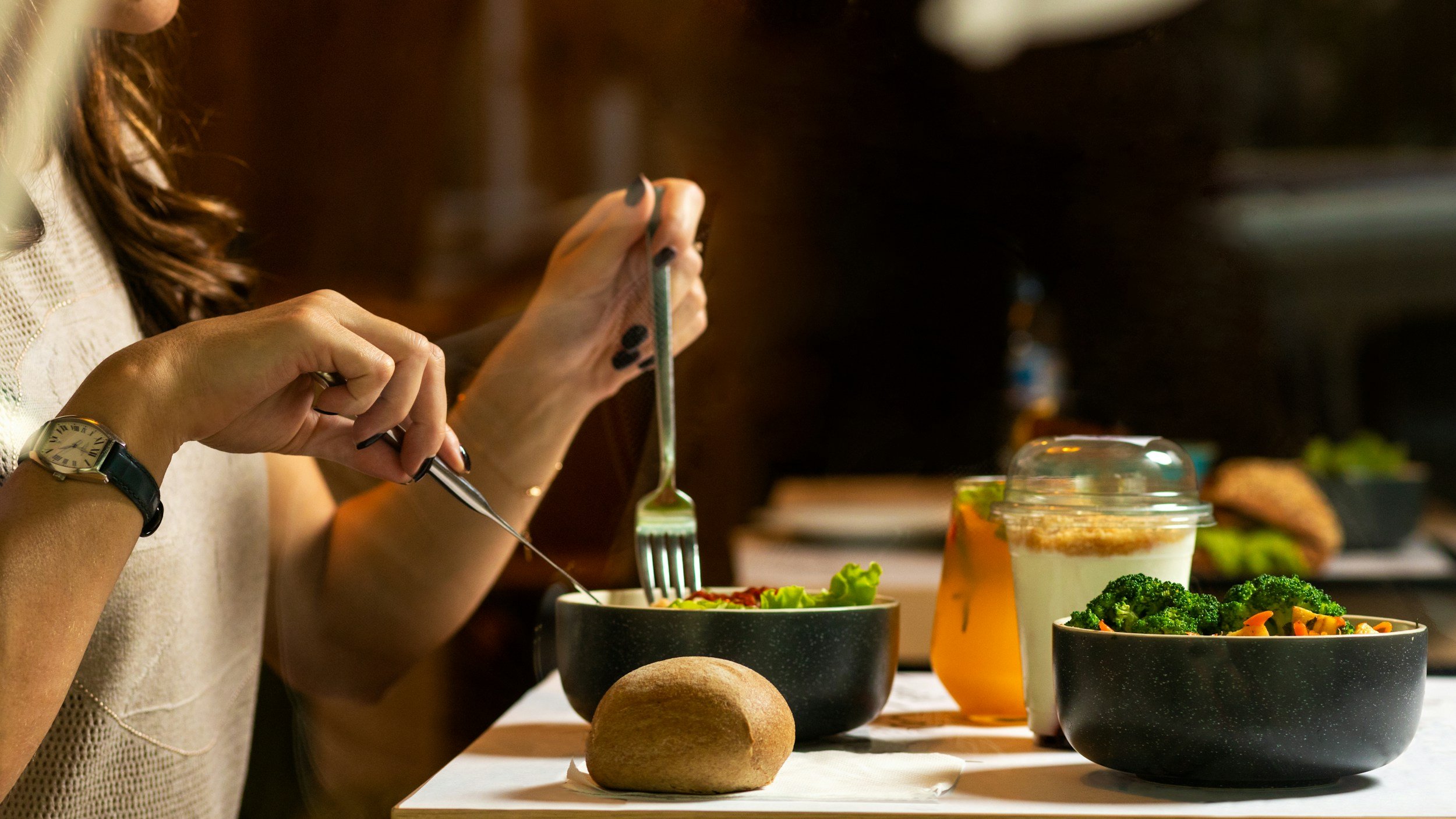
Your liver processes the food you eat and sends nutrients to all the different areas of your body. It takes your liver around 3 to 5 hours to break down the food you eat and send it out. That means it goes through its “stores” of nutrients in that amount of time and needs more fuel to continue to fuel your body.
When you’re pregnant, your body is working so much harder than “usual.” I’ve seen it said that pregnant women generally use enough energy every single day of pregnancy to equate to running a marathon every day for 40 weeks. That’s so much energy used to build your baby!
I typically eat breakfast around 8:30 AM every day. By 11:30 or noon, I start to notice my hunger signals kicking in.
Think about times when you haven’t eaten in 3-4 hours. Do you notice your stomach starts to grumble? Does your head feel a little light? Do you have trouble concentrating? Do you start to feel tired or grumpy?
That’s your hunger hormones and your liver talking to you, saying, “We need more fuel!”
Have you ever waited longer than 5 hours between meals when you were awake and felt sick? This sick feeling when I forget to eat for more than 4-5 hours is amplified drastically during pregnancy.
If you’ve waited too long to eat, maybe you then ate too quickly and had a stomach ache afterwards, or maybe you felt nauseous while you ate or even after you ate. It is a terrible feeling. When you wait more than 5 hour to eat, your liver runs out of fuel and has to start pulling fuel from your muscles to keep your body running. When you’re pregnant and wait too long to eat, your body automatically funnels all of its resources to your baby, which can leave you feeling even more sick and exhausted.
Eating every 3-5 hours (or at the very least offering our bodies food every 3-5 hours) helps keep your body working properly and helps us tune into our hunger cues so we can really hear when our body is telling us it needs fuel.
There are many times when we don’t mean to go so long without eating, but life gets in the way of being able to tune into our body’s signals. To think about how to minimize these situations and give our bodies the best chance of staying well-fueled and feeling good, let’s learn more about the different types of hunger.
Types of Hunger
There are actually many different types of hunger:
The first type of hunger, the one we typically think of when we think of “hunger” as a feeling, is called “Physical Hunger” (or Homeostatic Hunger). This is the body's natural signal for a need for energy and nutrients. It's regulated by the brain, particularly the hypothalamus, and involves hormonal signals like ghrelin (the "hunger hormone"). Physical hunger develops gradually and is accompanied by sensations like stomach growling, lightheaded-ness, and difficulty concentrating. Eating in response to physical hunger maintains energy levels and supports overall health.
Physical hunger is the hunger we listen to when we eat in response to feeling hungry and when we eat slowly. We fuel ourselves physically by tuning into our hunger and fullness cues.
But there are many other types of hunger we should all be aware of. Let’s go through some of them and discuss when you might notice each type of hunger and when you might want and need to feed each type of hunger:
Emotional Hunger
Another type of hunger is called “Emotional Hunger” (or Hedonic Hunger). This is a desire to eat driven by emotions rather than physical needs. It can be triggered by stress, sadness, boredom, or the need for comfort. It differs from physical hunger in that it often comes on suddenly and may involve cravings for specific foods.

While eating can provide temporary relief from emotions, it doesn't address the underlying emotional need. Emotional hunger may lead to overeating and can be a contributing factor to disordered eating tendencies and an unhealthy relationship with food.
There’s nothing wrong with eating something you enjoy or that makes you feel safe or comforted when you’re sad, but using food as your only coping mechanism to help you deal with the sadness is what can lead to a harmful relationship with food. Pair eating a sweet treat when you’re sad with a 5 minute journaling practice. Try using prompts like these:
I feel sad/angry/other strong emotion because…
The emotion I feel shows up in my body (name where you feel the sadness in your body and describe the sensation)...
Things I could try in order to process this emotion and allow it to pass are (make a list of activities such as going for a walk, getting a hug from a friend/family member, talking things out with a trusted friend, snuggling with a pet, or putting on music and having a dance party)...
Then, try one or two of the other ideas you just came up with to help you process the emotion you’re feeling. Next time you feel that emotion start to come up, go back to your list and try one of the other coping mechanisms you came up with instead of eating something sweet for comfort.
Emotional Hunger has come up for me during pregnancy a few times, particularly when I was highly anxious about an upcoming ultrasound to check for a potentially life-threatening issue with my baby. I wanted to gorge on chocolate and other sweets, but I knew doing so would make me feel horrible physically and wouldn’t help me release the challenging emotions.
Instead, I talked through my fears with my husband, cuddled with my dog, and watched one of my comfort TV shows to help naturally release my anxiety.
Sensory Hunger
There is also “Sensory Hunger” (Taste Hunger, Nose Hunger, Eye Hunger). This type of hunger is driven by sensory cues like the sight, smell, or taste of food.
Sensory Hunger happens when you walk past an open bakery and smell delicious fresh-baked bread or a warm chocolate chip cookie. You want that bread or that cookie! You might even start to salivate from the smell and even if you weren’t very hungry before then, you are definitely hungry now!
Like Emotional Hunger, Sensory Hunger can feel out of control if we allow our sensory cravings to run the show without being mindful of what we’re doing. I will always be a big proponent for a “lil sweet treat,” and with some simple mindful eating techniques, you can absolutely honor your Sensory Hunger without going overboard or having it impact your physical health and how you feel physically.
When you are hit with a craving from Sensory Hunger–that pastry is calling your name!--sit down at a table or somewhere you can relax for a little while, eliminate distractions (don’t scroll social media while you eat your sweet treat), and take in every bit of the sensory experience about eating it.
Smell it and make note of what it smells like.
Look at it and think about how good it looks and think about what it must have taken to make it. Thinking about the baking process helps you to slow down as well. I often like to think about how I could make something like it myself, (I am the Home Made by Mama, after all).
Take a small bite and really savor it. How does it taste? What do you notice about how your body reacts when you take a bite? Do you feel comfort? Energy? Does your heart rate rise a little bit?
Savor every bite of your sweet treat to truly satisfy your Sensory Hunger–and don’t be afraid to stop before you finish it if you notice your craving is satisfied and you don’t really want to eat any more. It’s helpful to have a friend who also loves sweet treats experience this with you; splitting a sweet treat makes it doubly sweet.
Specific Hunger
Specific Hunger is closely related to Sensory Hunger–it is when you have a craving for a specific type of food because of how that food makes you feel. Pregnancy is one of the main times in a woman’s life when we hear about specific Hunger or “pregnancy cravings.”
There’s nothing wrong with honoring a craving, and I’d even say that during pregnancy, honoring your cravings is necessary! But it is most fulfilling to use the method discussed above to eat what you’re craving. Taking the time to truly savor the food your brain was desperate for allows you to satisfy that craving without going beyond comfortable fullness.
Habitual Hunger
You may also experience “Habitual Hunger,” which is a type of hunger triggered by habits and routines–such as eating dinner at the same time every day or eating brunch at the same restaurant at the same time every Sunday morning. Habitual Hunger can be deeply intertwined with culture and family, and you should absolutely honor this type of hunger as much as you honor other types of hunger.
Food can facilitate connection. You’ve probably heard the saying “Food is Love,” and that can absolutely be true–especially if your family connects over cooking and eating foods. The next time you experience “Habitual Hunger,” make an effort to eat slowly and to take in everything else that comes with the habit/routine/ritual of that experience. Set your fork down and listen to the stories being told, watch how your family members or friends interact with one another, take in the quirks of the restaurant or the house where you’re eating. Eat slowly and mindfully and fully experience the environment around you.
Practical Hunger
The last type of hunger I want to talk about is Practical Hunger. Practical Hunger is when you may not be feeling the physical sensations of being physically hungry but you choose to eat because you know you will need fuel to get you through a big event or a long-period of time before you will be able to eat again.
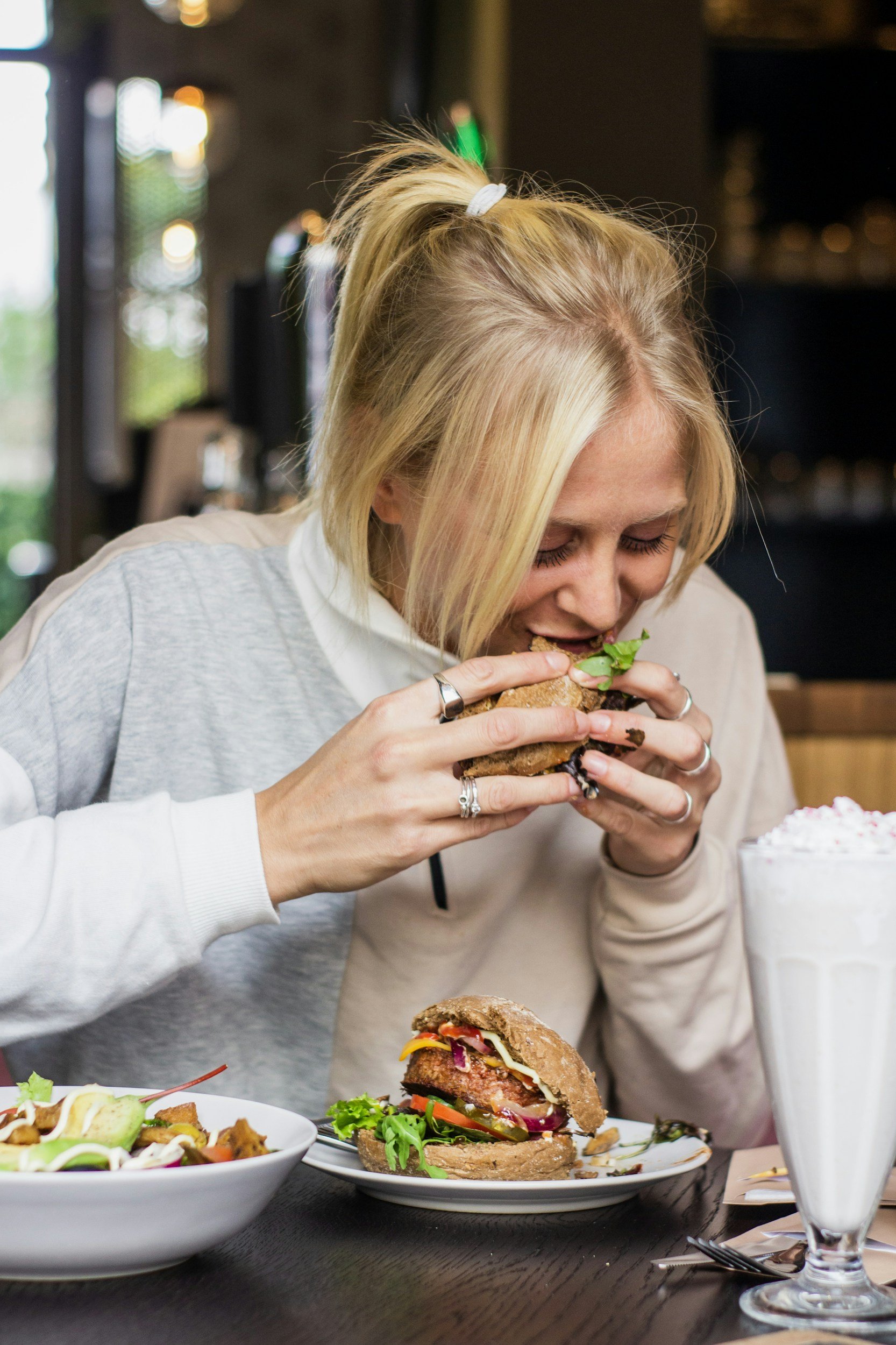
You may eat to honor practical hunger because you have a long work meeting coming up and you’ll be ravenously hungry if you wait until after the meeting to eat. Honoring practical hunger is something I do quite often during pregnancy because I know how hard my body is working to build my baby boy. I will often eat a snack in the afternoon even when I’m not experiencing any normal hunger symptoms because I know that the afternoon is when I have the hardest time tuning into my body’s actual symptoms. I tend to get distracted by work or errands around 2-3:00 PM, and I remember the times when I didn’t eat because I didn’t think I was hungry and then felt sick by 4 or 5:00 PM.
I call it my own “witching hour,” like babies tend to have in the evenings. 4 or 5:00 PM is my witching hour if I don’t eat in response to practical hunger in the late afternoons.
Eating to honor practical hunger is different from following “general eating guidelines.” When you honor practical hunger, you’re listening to the ways in which your body has reacted when you don't fuel it consistently. If you notice that you feel sick or exhausted when you don’t eat before the meeting or appointment, or that you’re distracted by intense hunger toward the end of the work day because you didn’t have an afternoon snack because you didn’t feel hungry, you're still listening to your body. Honoring practical hunger means you take that feedback from your body and eat when you are able to before you get too hungry.
When you’re pregnant, you may notice how helpful it is to honor your practical hunger. By eating a small meal or snack every 2-4 hours throughout the day, you can help keep your blood sugar balanced, which helps alleviate nausea and other icky digestive issues common in pregnancy. I didn’t do a great job of honoring practical hunger in the first trimester when I felt nauseous every afternoon and while I was still re-learning my hunger and fullness cues after a lifetime of ignoring them. But now, in my second trimester, I can really feel how my body asks for consistent fuel and I am able to keep my blood sugar stable without overeating or feeling restricted in any way.
Mama, your body is incredibly intelligent and is constantly sending you signals about what it needs to thrive. So many of us have been conditioned to ignore these signals for a variety of reasons, but you can rebuild trust with your body by learning to recognize and respond to different types of hunger and your natural hunger and fullness cues.
Start by practicing these two simple skills:
Eat slowly and Mindfully.
Eat every 3-5 hours.
Those two simple things lay the foundation for building a strong, healthy body that is able to build deep, long-term health. Pay attention to your hunger and fullness cues and honor Practical Hunger by giving your body what it needs during pregnancy or at any other time of your life.
Want to learn more about how you can build trust in your body, cultivate deep health, and thrive in pregnancy and motherhood? Share your email address and I’ll send you tips and inspiration right in your inbox: